
Cleaner Bed Lines and Fresh Mulch
Mulching and Edging in Litchfield for properties requiring organized planting bed definition and improved landscape appearance
Planting beds gradually lose their shape as turf creeps inward, mulch settles or washes away, and the line between lawn and bed becomes unclear. Fresh mulch and edging restore that separation, creating a visible transition and even coverage across shrub and perennial zones. Evergreene Earthworks provides mulching and edging in Litchfield for residential and commercial properties needing bed refinement or seasonal renewal.
Before mulch is applied, compacted mulch is loosened or removed, and bed edges are cut to a consistent depth with a manual or powered edger. New mulch is then spread to a uniform two-to-three-inch depth, which suppresses weeds and retains soil moisture. Edging creates a clean vertical boundary that keeps grass roots from migrating into planting areas and lets mowing equipment pass along the bed without damaging plants.
Schedule a site visit to review your planting beds and determine the mulch and edging needed.
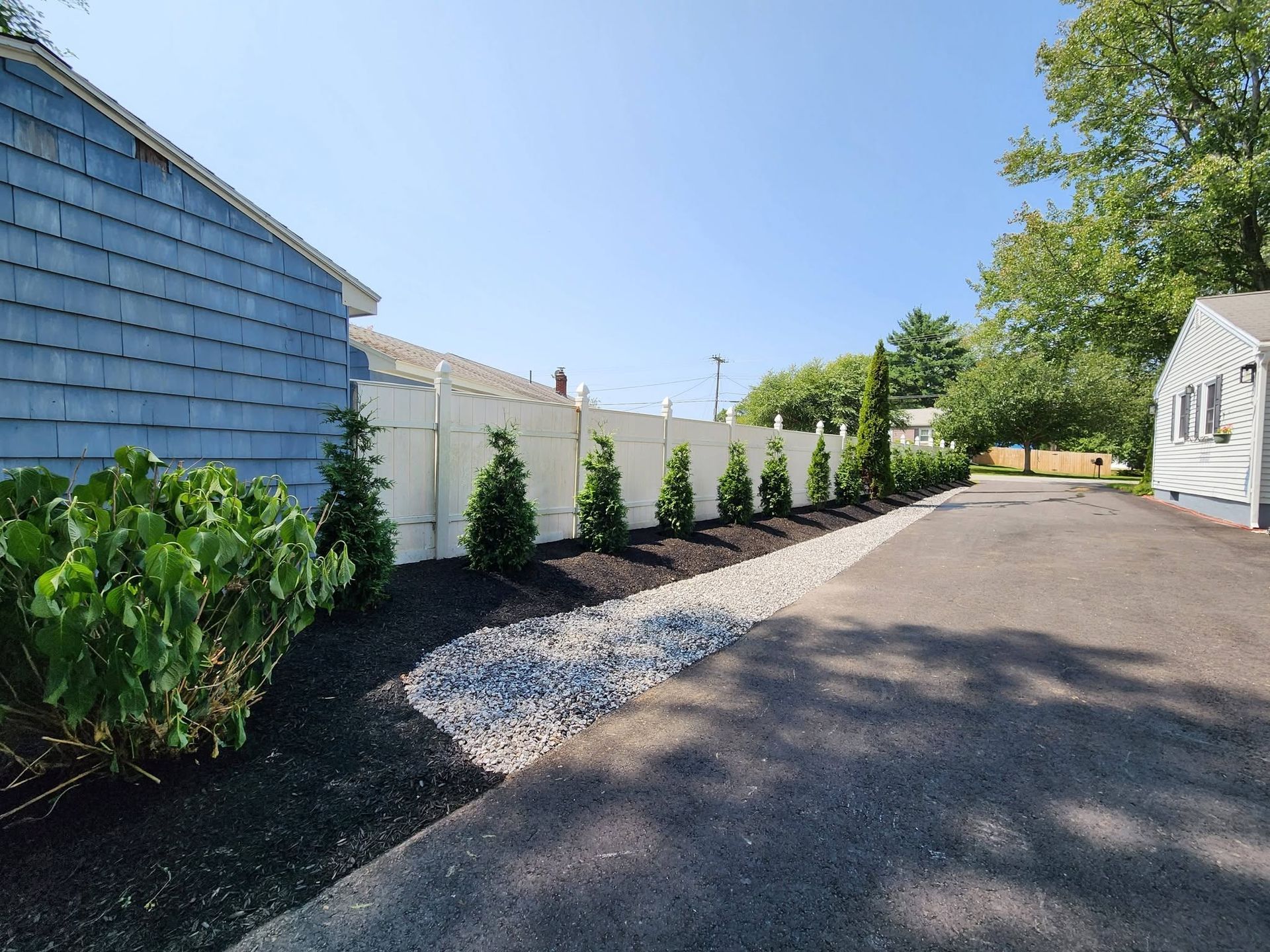
Why Proper Bed Preparation Matters
Mulch installed over compacted or uneven ground settles unevenly, creating low spots where weeds emerge quickly. Preparation involves pulling back matted mulch, raking the soil level, and cutting bed edges deep enough to form a stable barrier. Commercial properties often use darker mulch for visual contrast, while residential installations may choose shades that coordinate with plantings or architectural finishes.
Once complete, beds show distinct borders separating lawn from shrubs, with mulch sitting evenly, free of gaps or mounding. Edging keeps turf from blurring the bed line over the season, and fresh mulch slows weed growth by blocking light from reaching dormant seeds.
Mulch and edging are typically refreshed annually, though high foot traffic or heavy rainfall may call for twice-a-season service. This work can stand alone or be combined with broader maintenance like shrub pruning and debris removal.
Common Questions About Mulch and Edging
Properly installed mulch and edging improve both appearance and long-term bed management across residential and commercial landscapes.
What preparation is needed before mulch goes down?
Old mulch is loosened or removed where it has compacted, and the soil surface is raked level to prevent uneven settling after the new layer is applied.
How deep should bed edging be cut?
Edging is typically cut three to four inches deep to create a stable barrier that grass roots cannot easily cross and to allow the bed edge to remain visible through the growing season.
How much mulch is applied during installation?
Most beds receive two to three inches of fresh mulch, which is enough to suppress weeds and retain moisture without smothering plant crowns or creating drainage problems.
Can edging be maintained without adding new mulch?
Edging can be re-cut on its own to restore bed definition, but it is usually paired with mulch renewal since both services address the same planting areas and are completed during the same visit.
How does Litchfield's spring runoff affect mulch placement?
Properties with sloped beds or drainage channels may require additional edging depth or mulch anchoring techniques to prevent washout during heavy rainfall common in early spring.
Evergreene Earthworks handles mulch installation and edging for properties throughout Litchfield and works with both homeowners and commercial property managers. Call (207) 522-3733 to discuss your landscape beds and arrange a consultation.