
Establishing New Turf or Restoring Existing Lawns
Lawn Installation and Restoration in Litchfield for properties requiring complete lawn establishment or improvement to failing turf areas
Lawn installation creates turf where none exists, while restoration improves an existing lawn that has thinned, failed in sections, or degraded beyond effective maintenance. The right approach depends on whether existing turf can be revived or needs complete removal and re-establishment. Evergreene Earthworks provides lawn installation and restoration in Litchfield for residential and commercial properties, with each project starting with an assessment of soil condition, drainage, sun exposure, and the extent of turf failure.
New lawn installation involves preparing bare ground through grading, soil amendment, and debris removal before applying seed or sod. Restoration may include overseeding thin areas, topdressing uneven surfaces, or removing failed sections and re-establishing turf with hydroseeding or sod. The method depends on the size of the area, timeline for usable turf, and condition of the underlying soil.
Discuss your lawn's condition, size, and intended use to determine the best installation or restoration approach.
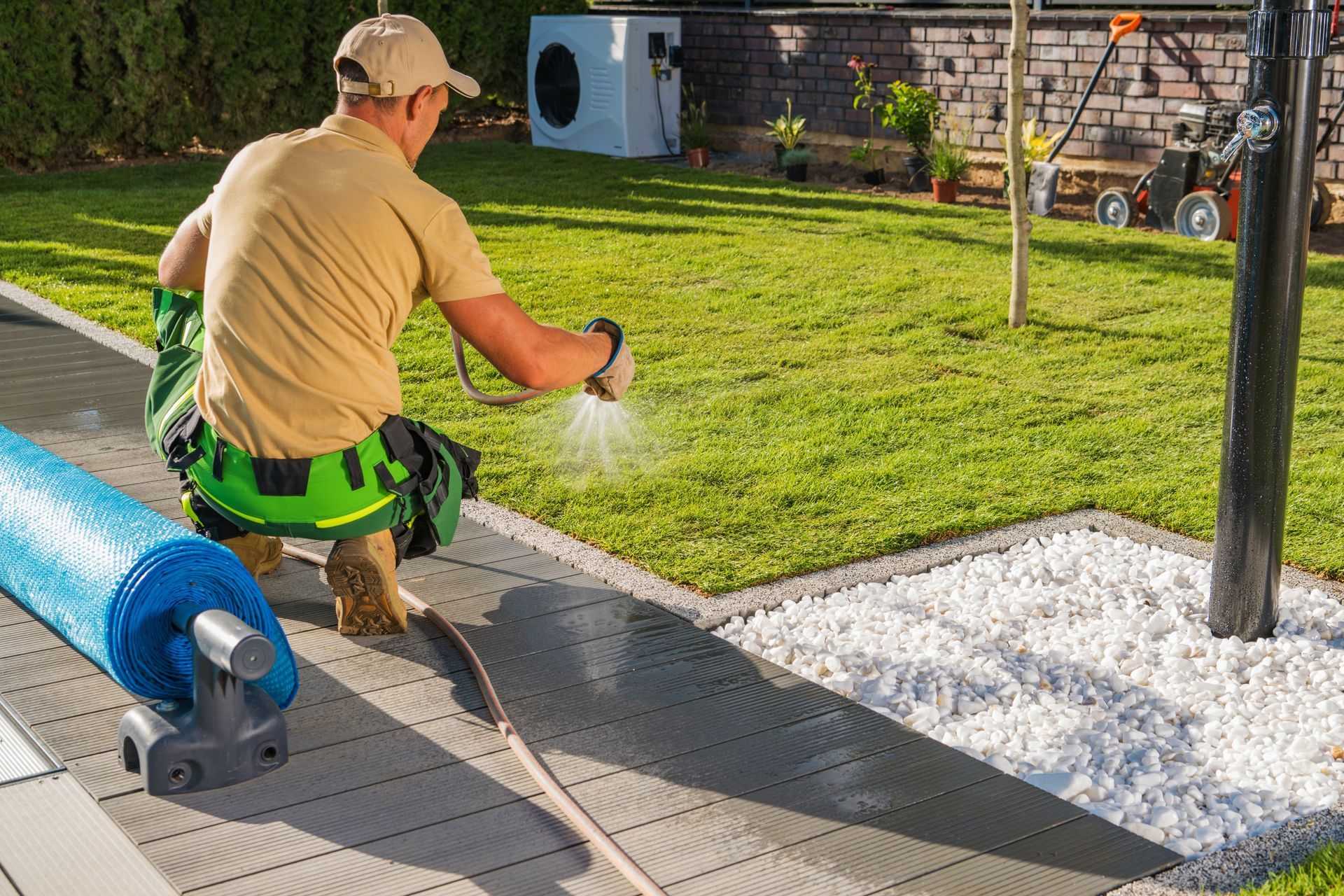
How Site Evaluation Guides the Process
Installation projects on new construction sites often require grading for drainage, removal of buried construction debris, and added topsoil where subsoil is exposed. Restoration projects start by identifying why the lawn failed — compacted soil that blocks root growth, poor drainage that drowns turf, or inadequate sunlight that limits grass vigor. Each condition calls for a different preparation step before turf is re-established.
Once complete, the property transitions from bare soil or failing turf to a uniform lawn. New grass fills in, and drainage improvements prevent water from pooling where turf once struggled. Residential properties gain usable yard space, while commercial properties restore curb appeal and reduce mud tracked into buildings during wet weather.
These projects are typically scheduled during spring or early fall, when soil moisture and temperature support root development. Properties with steep slopes, heavy shade, or poor soil may need additional site modification before turf establishment begins.
Answers Property Owners Need Before Starting
Lawn installation and restoration projects depend on accurate site assessment and preparation tailored to the property's specific conditions.
What is the difference between installation and restoration?
Installation establishes turf where no lawn exists, while restoration improves an existing lawn by addressing thin areas, soil problems, or sections where grass has failed completely.
How is the installation method determined?
The choice between seed, hydroseed, or sod depends on project size, timeline, soil condition, and budget, with each method offering different establishment speeds and site suitability.
What site preparation is required before starting?
Grading corrects drainage issues, debris is removed, compacted soil is loosened, and topsoil or amendments are added where the existing surface cannot support healthy turf growth.
Can an existing lawn be restored without complete removal?
Overseeding and topdressing can revive lawns with moderate thinning, but severely failed turf or underlying soil problems often require removal and full re-establishment to achieve lasting results.
How does Litchfield's clay-heavy soil affect lawn establishment?
Clay soils drain poorly and compact easily, so successful installation typically requires loosening the surface, adding organic matter, and grading to prevent water from saturating the root zone.
Evergreene Earthworks manages lawn installation and restoration for properties across Litchfield, including site evaluation, preparation, and turf establishment. Call (207) 522-3733 to arrange a site visit and discuss your lawn goals.